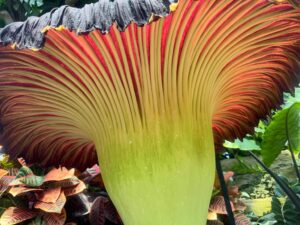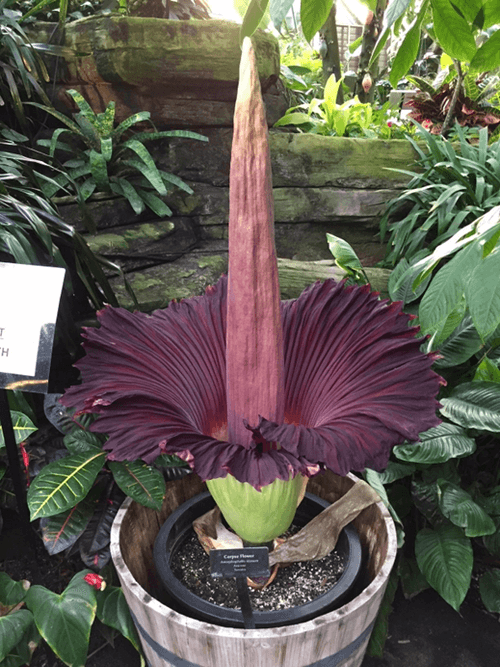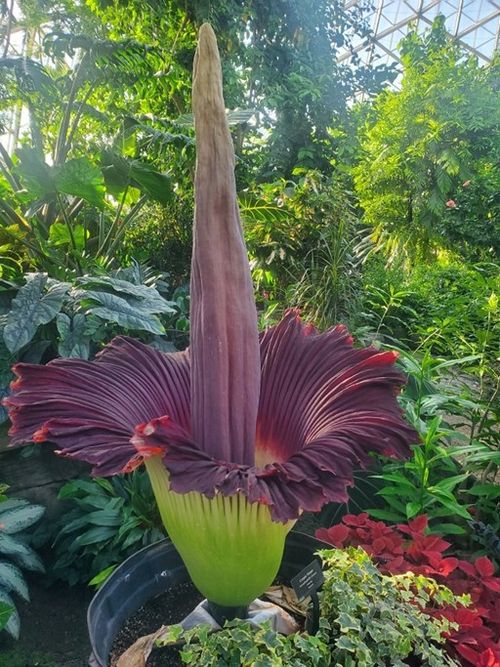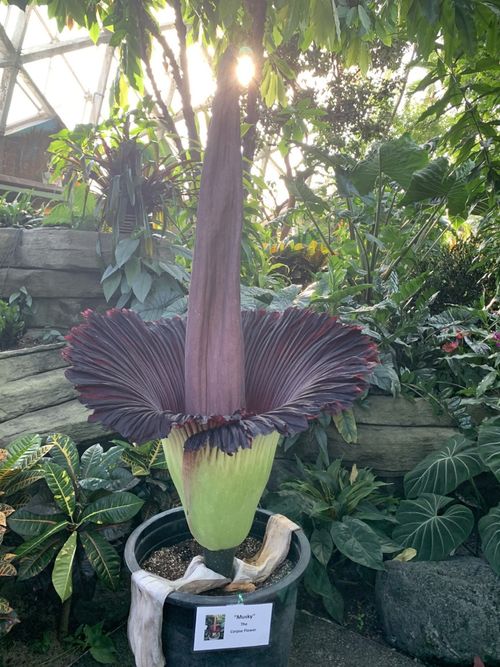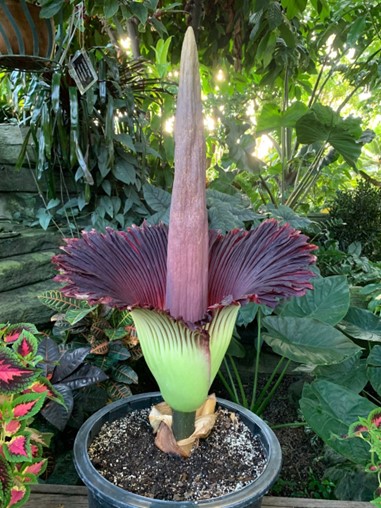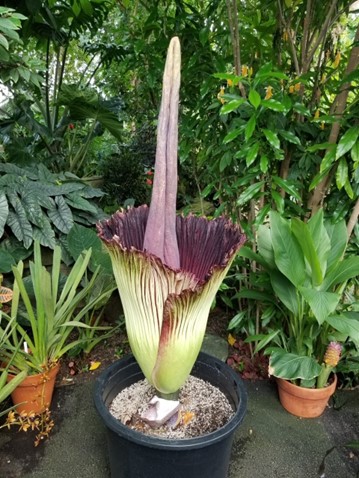
Penelope is about to bloom
One of the rarest, most dramatic events in the plant kingdom is unfolding in the heart of Milwaukee — and it lasts only a few days. Penelope, our corpse flower, is preparing to open as early as the week of June 23. When she does, you’ll have just 24 to 48 hours to see her.

Meet Penelope
YEARS IN THE MAKING, OPEN FOR ONLY DAYS
A corpse flower can take years to store enough energy for a single bloom, and the timing is famously hard to predict. Penelope last bloomed in June 2024, so a return this soon is a genuine surprise — and a rare chance to witness the phenomenon twice in a short span. Once she opens, the bloom stays for only 24 to 48 hours before it begins to fade. There’s no rescheduling a corpse flower, which is exactly what makes seeing one unforgettable.
WHAT IS A CORPSE FLOWER?
EQUAL PARTS LIVING SCIENCE AND NATURAL WONDER
Native to the rainforests of Sumatra and endangered in the wild, the corpse flower (Amorphophallus titanum) produces the largest unbranched flowering structure on Earth. As the bloom opens, its central spadix heats itself to between 90 and 98 degrees, releasing the powerful odor — often compared to rotting flesh — that gives the flower its name and draws pollinators in the wild. The smell is most powerful in the first hours after the bloom opens — often overnight — and fades well before the bloom itself closes, so what you notice depends on when you visit. It’s a full sensory experience: towering, warm to the touch of the air around it, and impossible to forget.
“To be able to care for our collection of corpse flowers is an honor as a horticulturist, and it’s especially inspiring when we get to share our work with visitors who are just as intrigued and excited to watch the bloom as we are.”
— Amanda Garchow, Horticulturist, Tropical Collection, Mitchell Park Domes
A MILWAUKEE PHENOMENON
SOMETHING WE GATHER TO SEE TOGETHER
The Mitchell Park Domes are among a small number of conservatories anywhere to bring corpse flowers to repeated blooms, with several openings since 2018. Each one turns the Domes into a gathering place. In past years, a single bloom has drawn thousands of visitors in just a few days, with lines stretching outside the building — families, students, longtime members, and first-time visitors all waiting together to see a rare event that stuns the senses.
“There’s nothing else like it in Milwaukee. A corpse flower bloom turns the Domes into a gathering place — families, students, longtime members and first-time visitors all in line together to see something they may never see again. That sense of shared wonder is exactly what the Domes are about.”
— Christa Beall Diefenbach, CEO, Milwaukee Domes Alliance
PLAN YOUR VISIT
SEE HER WHILE SHE BLOOMS
Penelope is on view in the Tropical Dome at the Mitchell Park Horticultural Conservatory, 524 S. Layton Blvd. — Milwaukee’s only beehive-shaped glass conservatory and a beloved fixture of the city skyline.
Because a bloom can open at any hour and fades quickly, we plan to possibly extend our hours while Penelope is open. If hours do get extended, we will announce evening and early-morning access on Facebook. Timing can’t be guaranteed, so check our channels before you head out.
SEE HER AS OFTEN AS YOU LIKE
A corpse flower bloom moves fast. The smell is strongest in the first hours after she opens — often overnight — and the spectacle keeps shifting right up until she fades. The surest way to catch Penelope at her best is to be able to come back, and members can: you get in free and return as often as you like throughout the bloom, morning, evening, or both.
Here’s the part most people don’t realize: for a family, a single visit can cover the cost of membership. Everything after that — every show, every season, every return trip to see Penelope before she fades — comes with the perks included in your membership.
Join in minutes at milwaukeedomes.org/get-involved/become-a-member
Corpse Flower Information
Genus and species: Amorphophallus titanum
Common names: Flor Cadáver (Corpse Flower), Titan Arum, “bunga bangkai” (Indonesian for “corpse” or “cadaver flower”)
Characteristics and Habitat
- Native to Sumatra, Indonesia; endangered due to habitat loss with fewer than 1,000 individuals in the wild
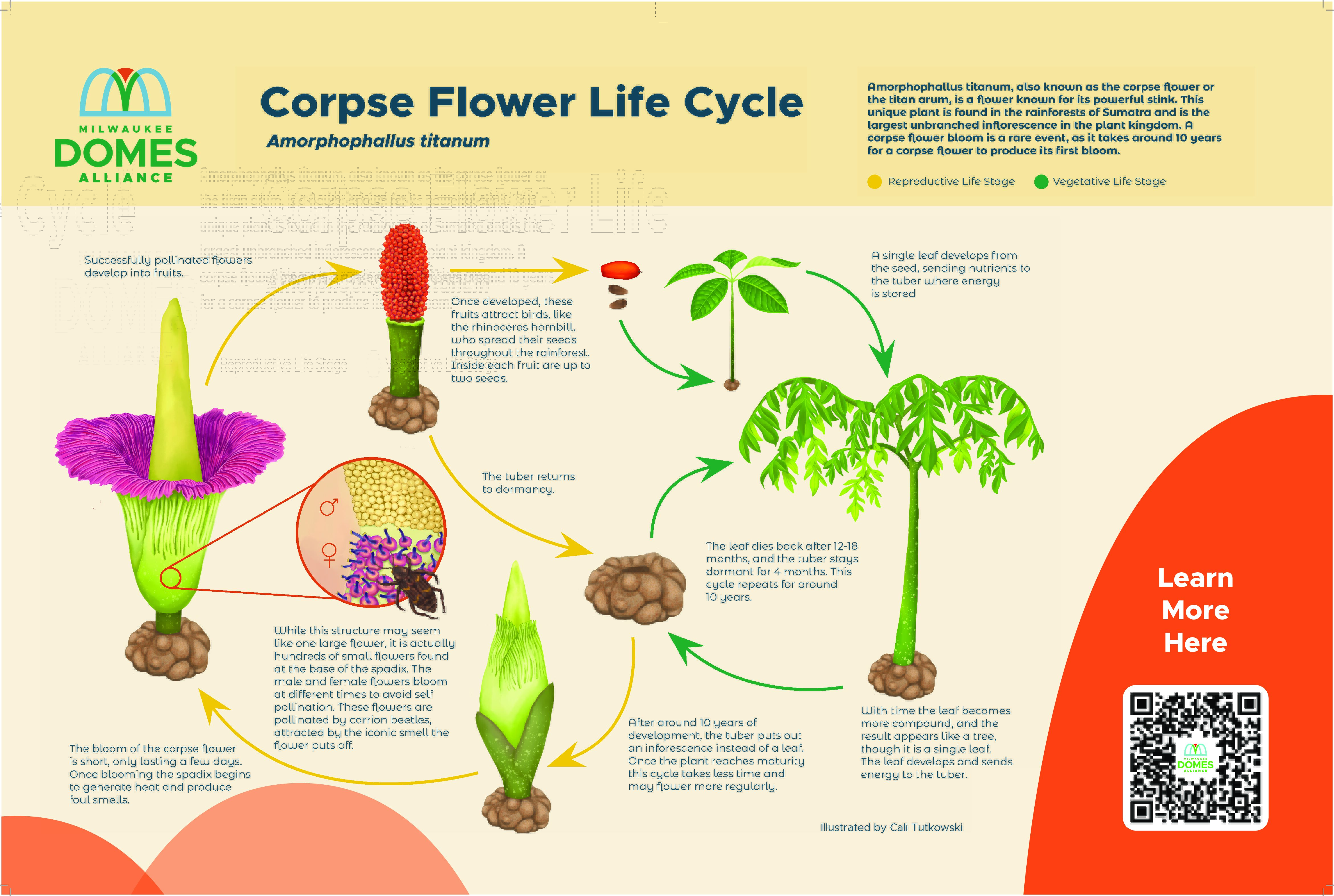
- The plant grows from an underground tuber called a corm, which stores energy
- Corms must weigh at least 20 lbs to bloom; the largest recorded corm is 339 lbs
Growth Cycle
- Sprouts a large leaf stalk, remaining for 12-18 months before dying back and going dormant for ~6 months
- This cycle repeats for 5-10 years before the plant blooms
- Blooming frequency varies and is unpredictable; the flower smells like rotting flesh to attract carrion flies/beetles for pollination
- The flower stays open for 24-48 hours before wilting
- Cataphylls drying and falling off signal the flower will open in 2-3 days
Blooming Process
- Spadix structure heats up (90-98°F) to release odor and attract pollinators
- Male and female flowers grow in rings around the spadix base; female flowers open first, followed by male flowers to prevent self-pollination
Mitchell Park Domes Conservatory Bloom Timeline
- Original corm obtained from UW Madison’s greenhouse around 2007.
- “Pepe le Pew” initial bloom June 2018
- “Pig Pen” initial bloom July 2021
- “Stinkerbelle” initial bloom August 2021
- “Musky” initial bloom July 2023
- “U’Reeka” initial bloom May 2024
- “Penelope” initial bloom June 2024
- “Pepe le Pew” second bloom (6 years after initial) alongside “Penelope” in June 2024