
Welcome to the Desert Dome
Deserts are places that receive less than 10 inches (25 centimeters) of rain per year, and they can be found on every continent. Inside the Desert Dome, over 600 plants are divided into collections that represent different regions around the world, including North and South America, Southern Africa, the Canary Islands, and Madagascar.
The Desert Dome is kept at a cool 50 degrees from October to March, and watered at just a minimum, to keep the plants dormant – this helps them bloom in spring and summer, when the desert dome comes alive with amazing color and aroma.
Around the pool in the oasis, find native crop plants and an ethnobotanical garden. Your desert experience will be one to remember at the Domes!
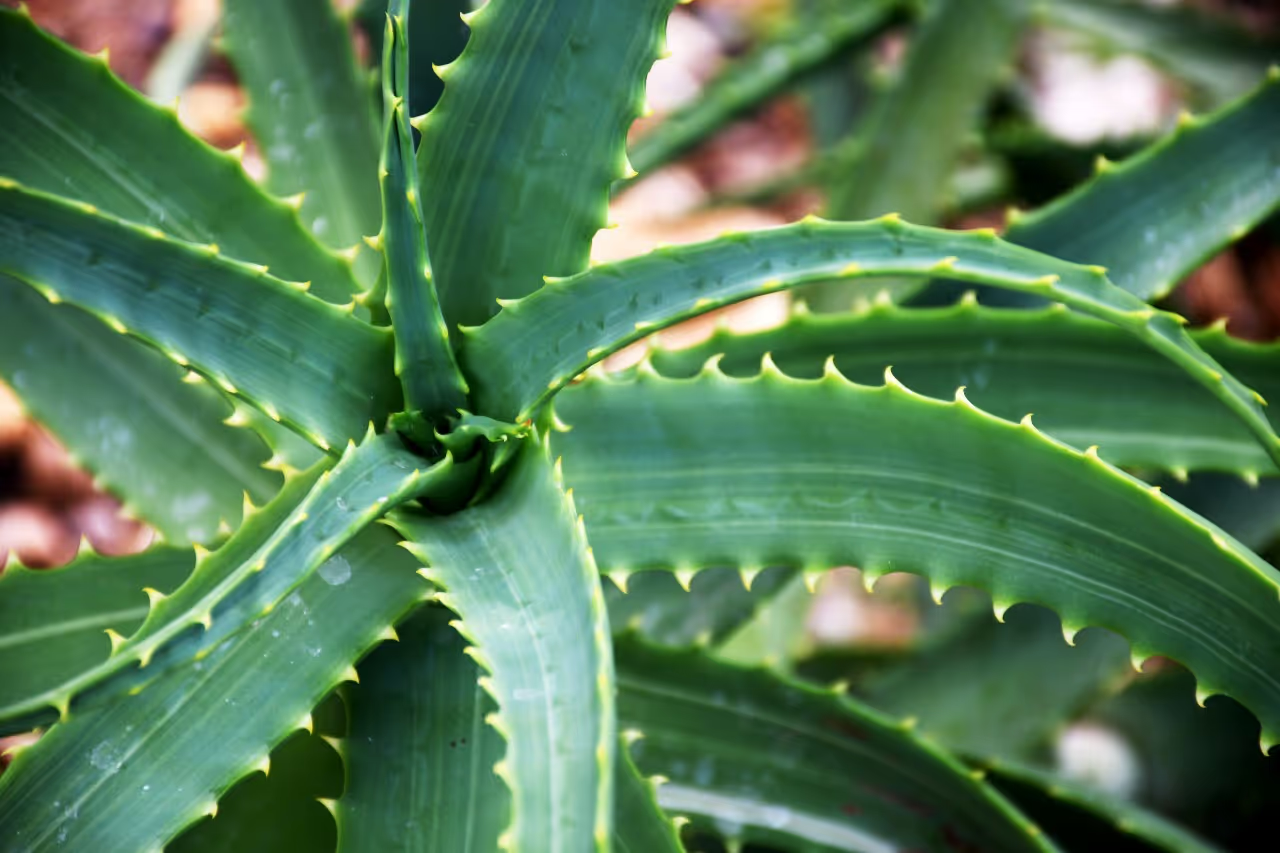
Our Arid Collection
World of Cacti
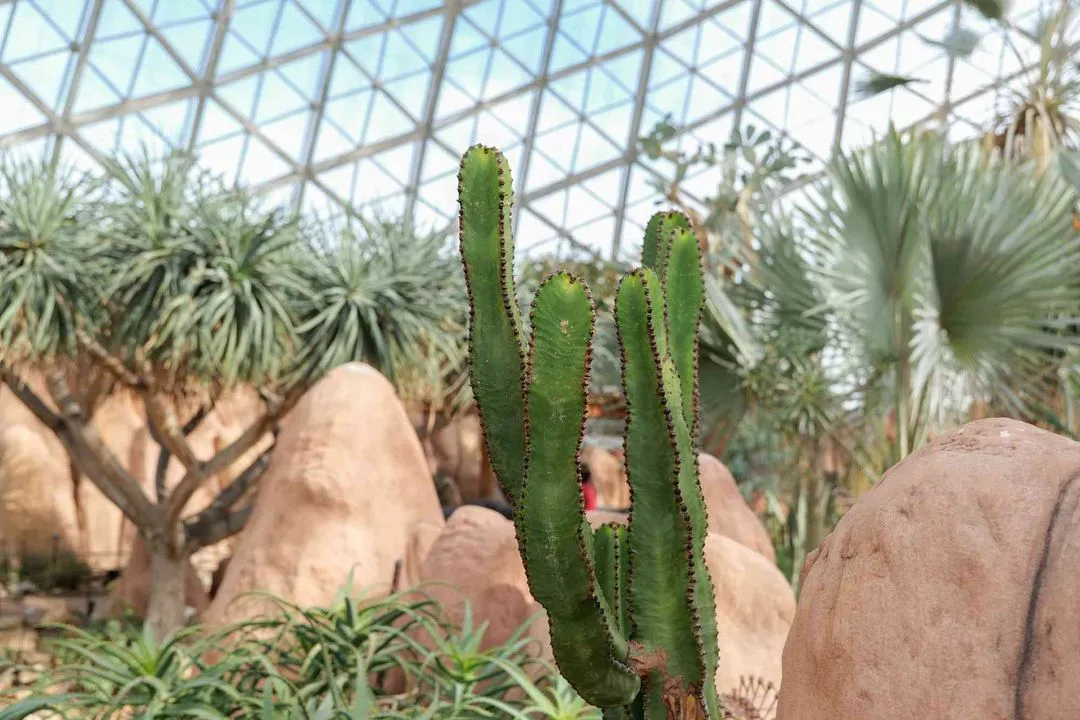
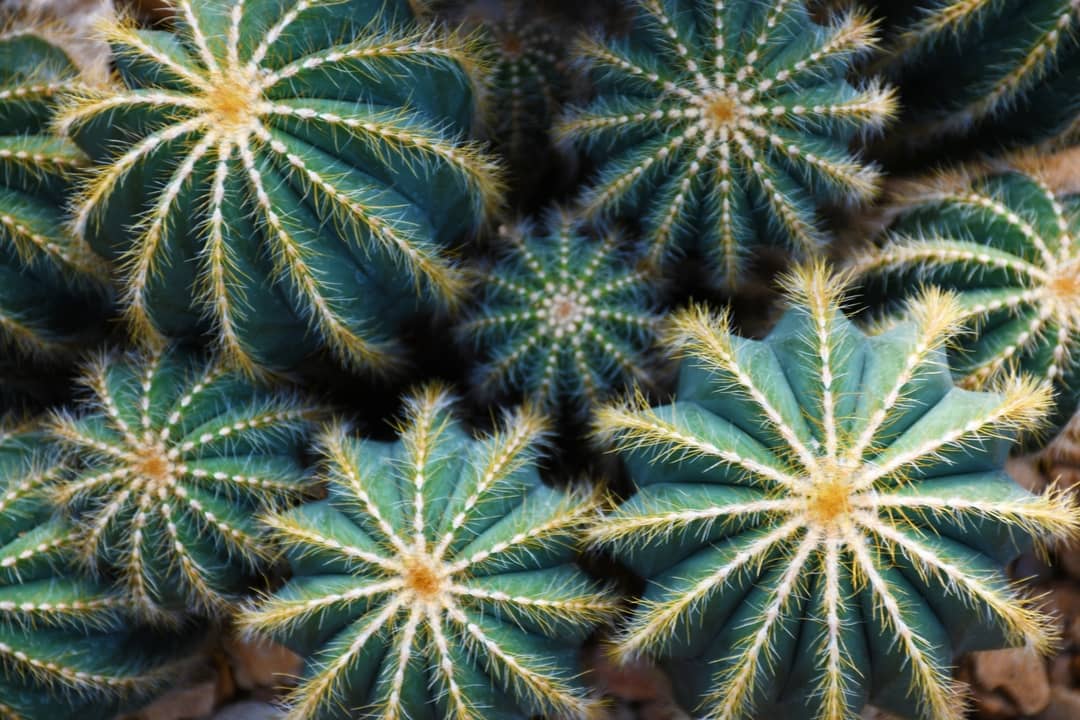
As you might expect, the Desert Dome is home to a wide variety of cacti, a plant family with over 2,000 species that can be found from Canada to the southern most tip of South America. As cactus live in some of the driest places on Earth, they have adapted to store water, and as well as defending against spine help prevent water loss by reducing air flow close to the cactus and providing some shade.
The tallest cacti in the collection are the Saguaro (carnegiea gigantea) which are found in Arizona, California and Mexico. Other cacti include prickly pear (opuntia sp.), Golden Barrel (echinocactus grusonii), Queen of the Night (Nyctocereus serpentius) and Old Man Cactus (Cleistocatus straousii)
The Oasis
In a deep pond shaded by date palms, you will find aquatic papyrus plants, used by ancient Egyptians to make paper. By the shore is the ethnobotanical garden with plants important to arid agriculture, including agaves and chili peppers. Chilis were one of the earliest plants to be cultivated in the New World and today are among the top 75 most consumed plants in the world.
Desert Blooms
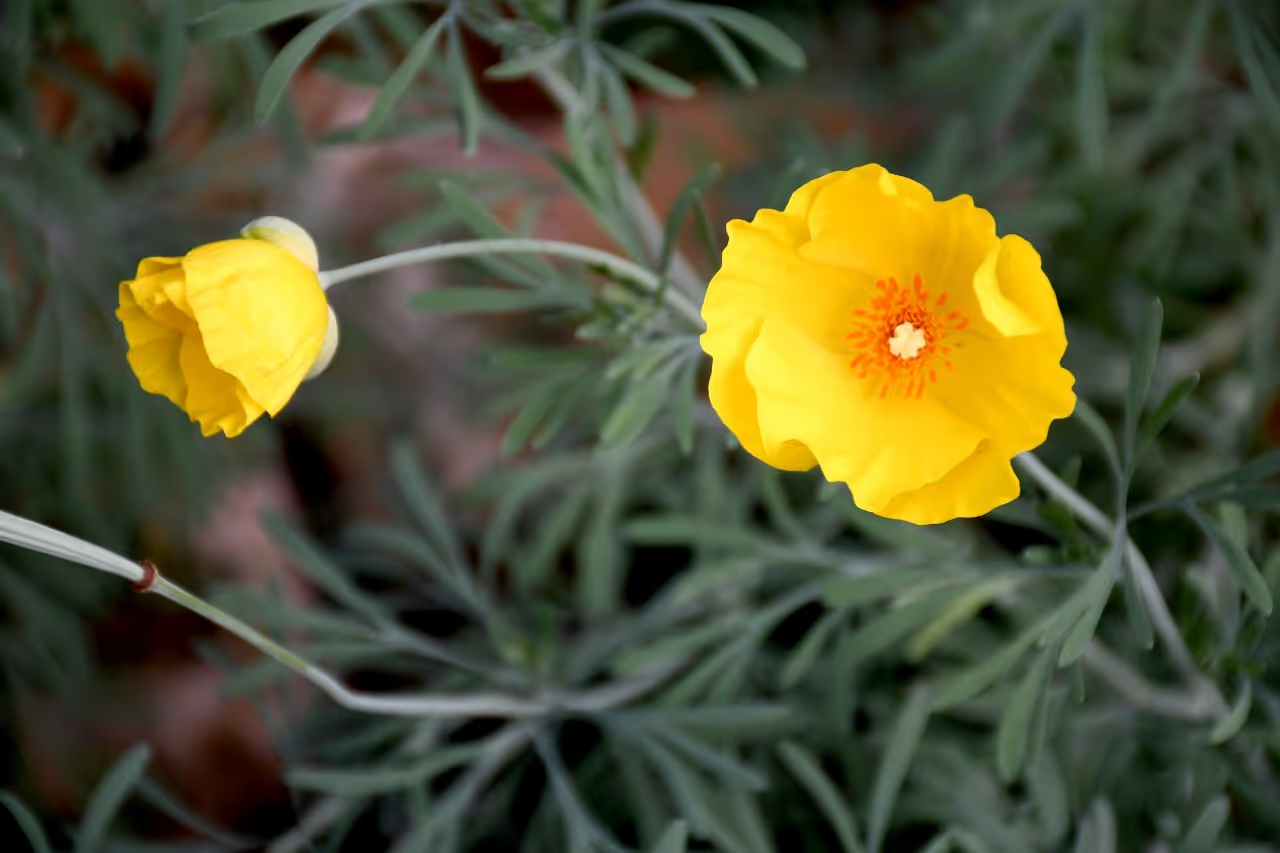
The desert dome, especially during the spring and summer months, can be surprisingly colorful and fragrant thanks to the wide variety of blooming plants. The floral collection includes plants such as Brazilian Edelweiss (Sinnigia Ieucotricha), pampas grass (cortaderia selloana), transvaal daisy (gerbera jamesonii) and Feathery Cassia (cassia artemisiodes)
Edible and Medicinal Plants
Throughout the Desert Dome you’ll also find many familiar plants which are known for their medical benefits, or their use in food. These include the Date Palms, Prickly Pear, Argan Tree, which produces edible nuts and an oil used for cooking and beauty products; the Elephant’s Food plant, with leaves that are used as a medicine for treating exhaustion and dehydration; and Agave, which is used to make tequila.
African Collection
When the succulents of North America go dormant for the winter, the aloes of Africa begin to bloom. Overhead you will see tall, tree-like flowering plants and an array of palms, ferns and cycads. At your feet are varieties of Lithops (living stones) that store water in leaves. Perhaps the most intriguing specimen of all is the Welwitschia mirabilis from southwest Africa. The plant’s long taproot allows its stiff leathery leaves to survive for centuries on little more than coastal fog. Equally interesting are the cycads, which are ancient relatives of our familiar conifers.
Madagascar Collection
An island off the east coast of Africa, Madagascar’s isolation from the mainland has facilitated the evolution of plant species found nowhere else on Earth. The Desert Dome collection is one of the largest in the United States. Whenever Domes botanists could not obtain specimen plants from other collections, they started plants from seed sent directly from Madagascar. Familiar friends such as Euphorbia milii (crown of thorns) and Catharanthus roseus (Madagascar periwinkle) will greet you as well as bizarre trees (Operculicarya) and thorny shrubs (Alluaudia and Pachypodium) that shed their leaves during drought or store water in large swollen stems and roots called caudices.
Canary Islands Collection
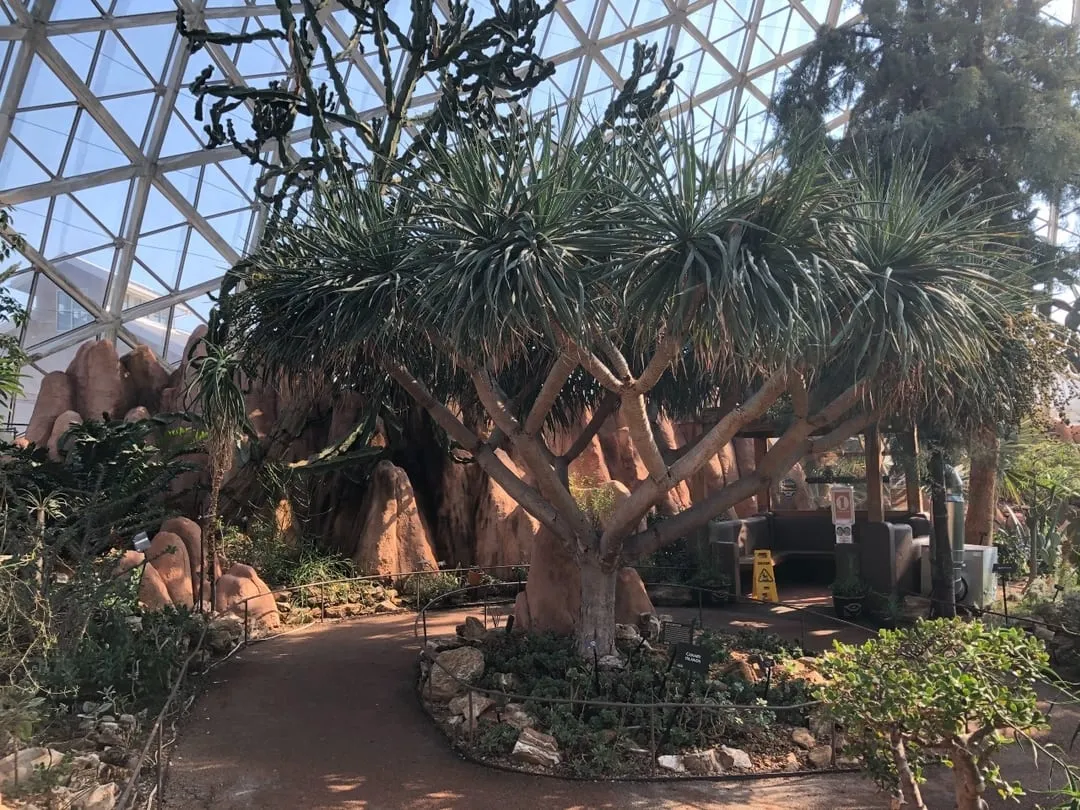
Featured on a small “island” along the walk is the splendid Dracaena draco, the dragon blood tree of the Canary Islands. It was named because its red sap was once marketed as “dragon’s blood” during medieval times. This plant can grow to an immense size and live for over a thousand years. Here you can also see several species of aeoniums, which are leafy succulents that resemble green daisies.
South American Collection
You might imagine tropical rainforests when you think of South America rather than deserts, but countries such as Argentina, Chile, Bolivia, Brazil, Peru and Colombia do indeed have extensive arid ecosystems. Some of these deserts are at high elevations that experience intense light levels. The cactus family is well represented, and you will find adaptations that include white wool, dense spines and columnar growth. The white hair of the tall silver torch cactus (Cleistocactus strausii) can be particularly eye-catching in the sunlight.
North American Collection
The deserts of North America – the Sonoran, Mojave and Chihuahuan, are rich in species and growth forms. The Desert Dome collection reflects this diversity with a cacti collection that includes paddle-shaped prickly pears (Opuntia), round golden barrel cacti (Echinocactus grusonii), fiercely spiny fish-hook cacti (Ferocactus), and even clumps of towering, columnar wax cacti (Neobuxbaumia polylopha) that are probably older than you. Look for the bizarre boojum tree (Fouquieria columnaris), a rare plant from Baja California that survives bleak, arid conditions and can grow into an other-worldly form.
AT THE DOMES

Domes Reimagined Plan: The Future of the Domes
Learn More

Fall Show 2026: Treasure of the MUMmies September 19th – November 8th
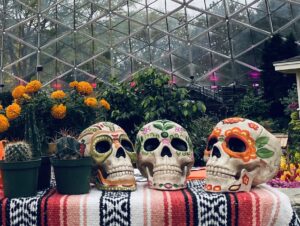
Día de los Muertos (Day of the Dead), October 30th, 6 PM – 9 PM